Highlights of the trip
- I'm gonna take my horse to the old town roads...
- Epic sceneries of the titanic Alay mountains
- Prestine nature
- Nomadic and rural lifestyles
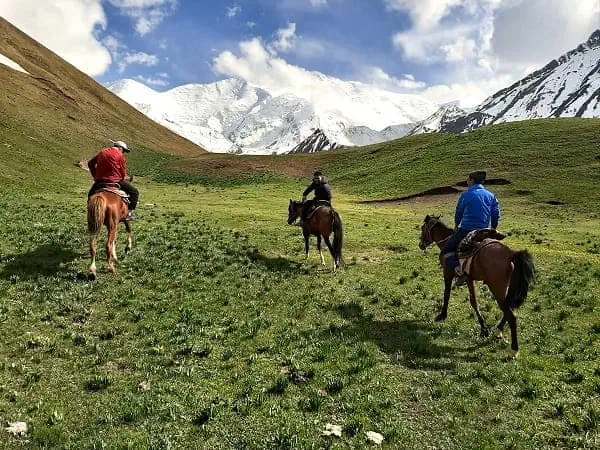
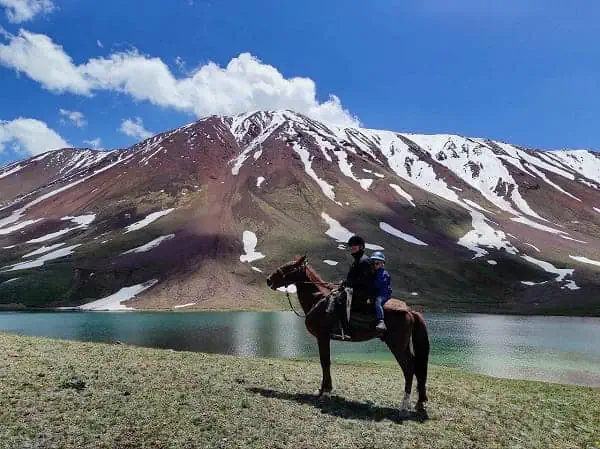
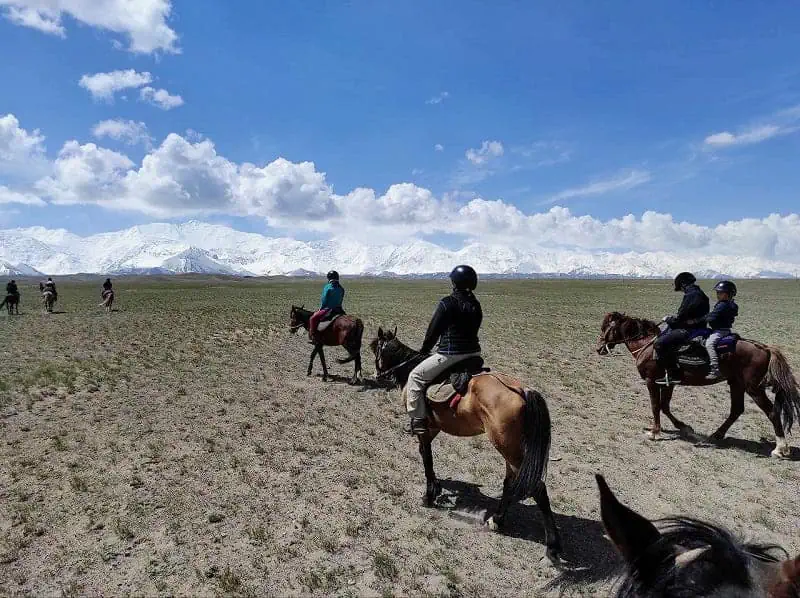
Alay Mountains – Central Asia’s Trekking Utopia. The place where the titanic mountains blend with rushing rivers, lush green pastures, and a nomadic spirit. Enhance your immersion in this utopia by adding a horse-riding experience to your journey.
Tour Details
Available
June -- September
Schedule
Upon request
Duration
9 days (6 days of horseriding)
Price
upon request
Difficulty
Moderate to chellending : suitable for beginner with basic riding experience
Required items
Trekking boots (+light shoes), weatherproof warm clothes, hat, gloves, sunscreen, sunglasses
Itinerary
Day 1. Osh – Kozho-Kelen
100 km, 3.5 hours
Your first day of horse riding odyssey starts with a drive to one of the most scenic villages of Kyrgyzstan – Kozho-Kelen. It is a 100 km, 3.5-hour journey where you will witness the exotic nature of the south, driving through mountains, flora, and shepherd huts and yurts. The road will also take you along the main water supply of Osh and its surroundings – the Papan Reservoir. Upon arrival at Kozho Kelen village (2,230 meters above sea level), you will have a hearty lunch at the guest house and then head for the acclimatization hike (2-3 hours). You will visit the Blue Grot and the waterfall. Enjoy your dinner after the hike and prepare to rest before the major part of your adventures.
Day 2. Kozho Kelen– Kosh Moinok
14 km; 4 hours of riding
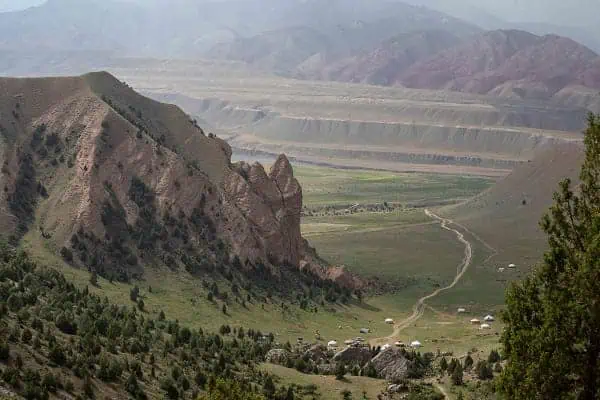
Charge your batteries with a filling breakfast, mount the horses, and depart on your journey along the slopes of the beautiful Cretaceous mountains of Kichi-Alay. You will cross the picturesque Sary-Bel Pass (3150 m), which translates to “Yellow Hill” in Kyrgyz, referring to specific terrain and color of the local landscape in certain seasons.
The path will lead you to a scenic Kosh-Moinok gorge. The name stands for “Two Pastures,” reflecting the region’s pastoral nature and the people who dwell there. Unique scenery and tranquil surroundings of Kosh Moinok make it popular among travelers searching for exotic camping and trekking experiences. The day ends with a visit to the local yurt camp for dinner and overnight.
Day 3. Kosh-Moinok – Sary-Mogol pass.
17km; 5 hours riding
Today, you are heading towards the Sary-Mogol pass via a little passage from Kyzyl-Chara. The path leads to the south side, along the mountain river, with cliffs on both sides and subalpine and alpine meadows that diversify the landscape.
Besides the nature, you will hear the crying marmots and birds singing. You will see large birds such as vultures, golden eagles, owls, and hawks floating in the sky. As the area is also inhabited by mammals such as wolves, foxes, badgers, wild boars, mountain goats, and jackals, you may find traces of them.
Relax upon arrival at the yurt camp.
Day 4. Cross the Sary-Mogol’s pass (4300m) – Camp of Sary-Mogol pasture.
12km; 6 hours riding to the camping point
Today, you are about to challenge your body and spirit and conquer a steep pass. It is not a long distance, but the pass takes time. You will blend with an incredible landscape, feel the sky, and the height of the Pamir-Alay. As you will finally ascend the Sary-Mogol Pass (4300 meters), you will see four rocky lakes (Besh-Kol) and the natural channels that connect the lakes.
After 15 km on horseback, the trail will bring you to the yurts of locals located near the mountain river, where you can spend the night in a tent.
Day 5. Riding to the next camp over Kara-Kabak
20km; 7 hours riding
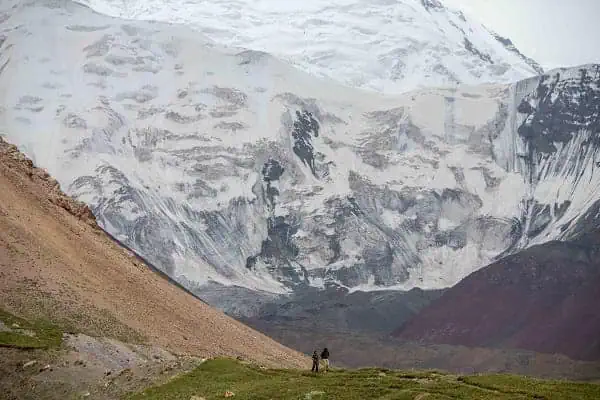
Today’s trek begins with a gradual ascent that steepens as you approach the pass. You will cross the rocky terrain and may encounter snow patches, despite the summer. Karakabak Pass offers breathtaking panoramic views of the Alay Valley and the epic Lenin Peak (7,134 m). The rugged cliffs, jagged peaks, and expansive glaciers accompany you along the trail. Reaching the pass, you can choose to either return the same way to Tulpar-Kol or continue descending into the Karakabak Valley. The descent, which takes you through high-altitude pastures with herders grazing their livestock, is steep but doable. The valley is less tourist-heavy, giving you a chance to experience the region’s untouched wilderness. If time allows, you can continue the journey to Kashka-Suu pasture.
Day 6. Kara Kabak – Damdjailoo
20 km; 8 hours riding
This day is about ascending higher. After passing the hill on the right, you follow up to the Kashka-Suu valley. The path leads through a narrow gorge among juniper trees and wild bushes. As you arrive in Kok Djar Valley, the landscape widens. You will cross the pass (4120 m) and descend into the lakes. Here, you will set up camp, have dinner, and spend the night in tents at 3870m.
Day 7. Kosh-Kol lakes – riding to Damjailoo – transfer to Sary-Mogol
Leave your stuff in camp, grab your lunch boxes and light items, and walk up to 4130 meters to see a couple of lakes at higher elevations. Return to the camp, grab your stuff, and head towards Kashka-Suu village, from where you will be transferred to Sary-Mogol (25km, 30-minute drive).
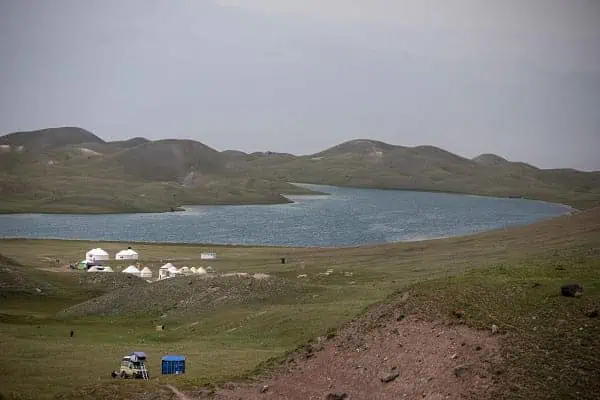
Day 8. Sary-Mogol – Tulparkol Lake
After breakfast, the driver will take you to the yurt camp located near Tulpar-Kol Lake (25km, 1 hour driving). Leave your heavy bags before heading to the Traveler’s Pass. Within 7 hours of a round-trip walk (14 km), embrace the majesty of the panoramic view of Lenin Peak, rugged terrain, glacial streams, rocky slopes, and alpine meadows. Replenish your energy with lunch before taking the same route back to your yurt for an overnight stay.
Day 9. Tulpar-Kol – Osh City
Your 9-day horse riding journey in the Alay Mountains is coming to an end. Enjoy your breakfast, say farewells, and head back to Osh. But the journey isn’t over yet, as you will be driving through the picturesque Alay valley on M41.
Arrival in Osh. End of trip.