Highlights of the trip
- Epic sceneries of the titanic Alay mountains
- Prestine nature
- Nomadic and rural lifestyles
- Turquoise lakes
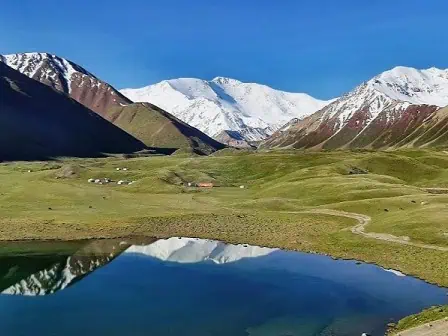
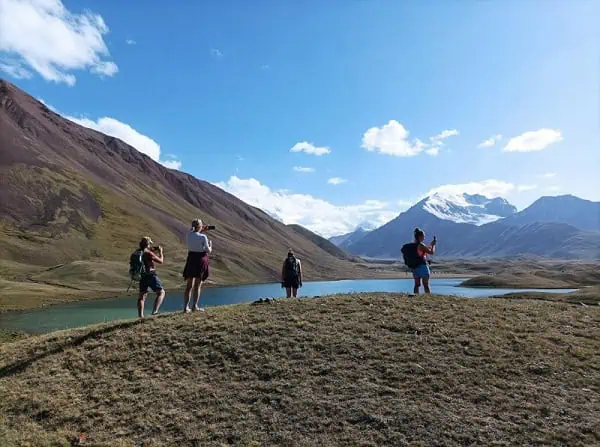
Discover the Tulpar Kol Lake area – the gem of the Alay Mountains with its diversity of hiking routes and landscapes. Customize your journey with the hiking routes below, and let us arrange your experiences in the best possible ways.
Tour Details
Available
June (mid) - Early September
Schedule
Upon request
Duration
5 days (3 days of hiking)
Price
upon request
Difficulty
Moderate - challenging
Required items
Check the FAQ section
Day 1
Day 2
Day 3, 4 or even 5
Neccessary items
Why choose us?
Day 1
Osh — Sary-Mogol — Tulpar Kol Lake
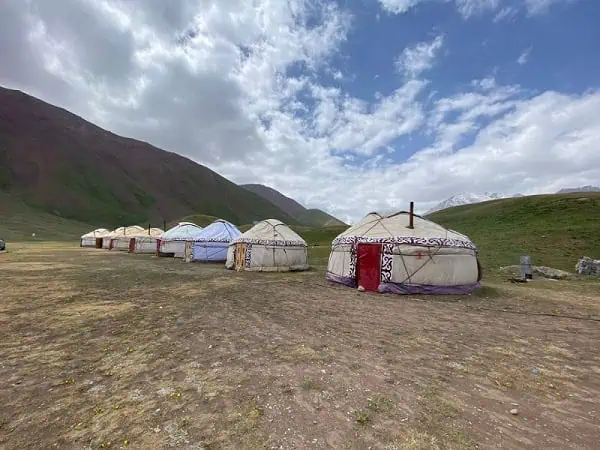
A morning departure from Osh to Sary-Mogol through the scenic Alay mountains and valley. Optional detour to visit the Kolduk lake – a beautiful mountain lake, located to the east of Kolduk village. Arrival in Sary-Mogol and enjoying your lunch before departing for Tulpar-Kol Lake (a 1-hour drive). You are welcome to walk around the lakes before dinner and spend the night at the yurt camp.
Day 2
Enjoy a filling breakfast and energize for the first day of the hike. Leave your heavy bags at the yurt, as you will be returning tonight to the same yurt camp. So here are the options:
1. Easiest hike to the Lenin Peak Basecamp:
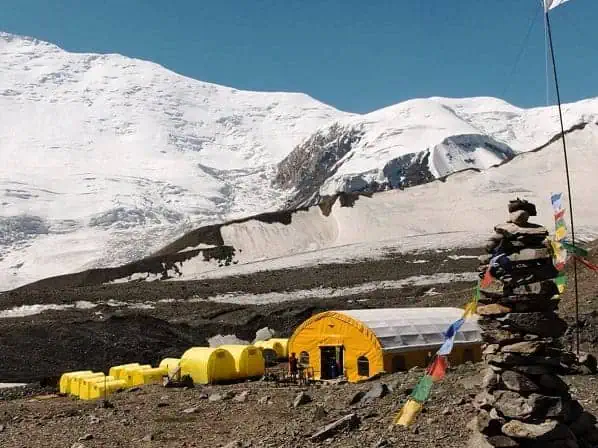
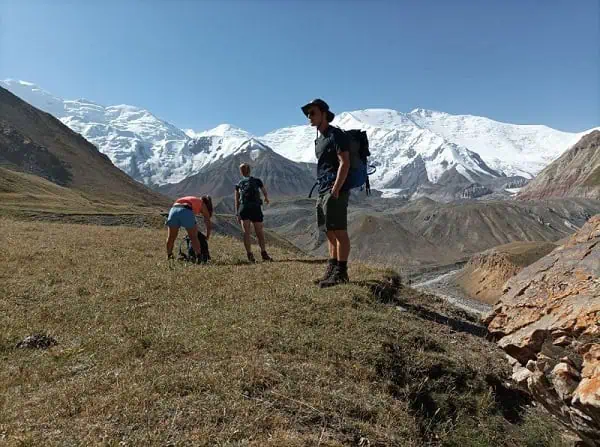
Embark on a popular route, covering a total distance of 14 km (round trip, around 6–7 hours). It starts at the Achyk-Tash area, where you’ll cross a pedestrian bridge and begin ascending into a picturesque gorge. The trail gradually leads to the Base Camp of climbers aiming to conquer the Lenin Peak. It is a vibrant area featuring a variety of colorful tent camps and traditional yurts. You’ll see climbers preparing to storm the peak, adding an adventurous atmosphere to the trek. Walking further will bring you to the Onion Glade. After the Onion Glade, you can start heading back to Tulpar Kol Lake.
- Distance: ~6 km round trip
- Duration: 2–3 hours
- Difficulty: Easy to moderate
2. Go all the way to the Travelers’ Pass:
If you feel energetic and eager to see more, then push yourself all the way up to the Traveler’s Pass, from where a grand view of the Lenin Peak will unveil. And only after this, you can head back to the yurt camp for a well-deserved rest.
- Distance: ~12–15 km round trip
- Duration: 6–8 hours
- Difficulty: Moderate to challenging
3. Peak Panorama:
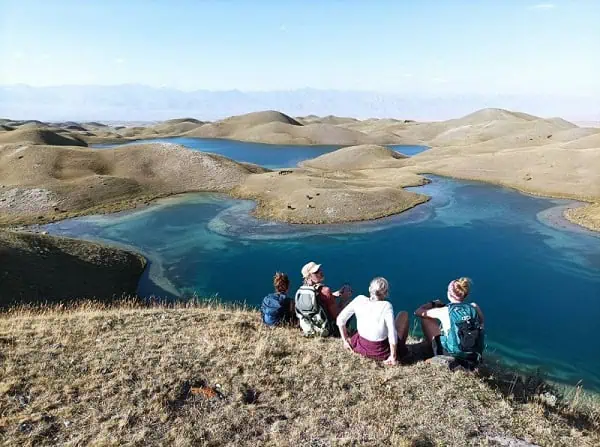
Instead of hiking towards the Travelers’ Pass, head towards the Pik Panorama. It is a stunning viewpoint of Tulpar-Kol Lake, offering a breathtaking panoramic view of Lenin Peak, the Alay Valley, and some glacial lakes collectively known as the «40 Lakes.» It is a challenging yet rewarding ascent, making it a highlight for experienced trekkers and photographers.
- Distance: ~10–12 km round trip (varies depending on the trail you choose).
- Duration: 3–4 hours.
- Difficulty: Moderate to challenging (due to steep sections and high altitude)
4. Tuyuk Canyon
Those who struggle with high altitude can take an alternative route to the shepherd’s yurt in Tuyuk Canyon instead of climbing to Panorama Peak. Walking this route and entering the canyon, you will witness the transition of grassy slopes into a rocky terrain. You may observe the diverse wildlife in the face of eagles, marmots, foxes and rarely the ibex. In summer time you will come across multiple yurts and huts of real nomads coming to this area to graze their cattle. Upon request, this route can be arranged on a horse back.
- Distance: ~15–20 km round trip, depending on the exact viewpoint you aim for in Tuyuk Canyon.
- Duration: Full-day hike (5–7 hours round trip).
- Difficulty: Moderate to challenging (due to some steep sections and loose terrain).
5. Bouke yurtcamp with overnight
Here come another IF! If you want to walk further from Tuyuk and spend at least one nights outside the Tulpar Kol yurt camp, then continue further from Tuyuk towards the Bouke yurt camp. After an overnight at Bouke you can head back to Tulpar Kol or hike for another 20 km before being picked up by a driver and return to Osh via Sary-Mogol.
PS., fee free to choose any relevelant option that suits your interest and time available. Or, dedicate more days for your visit to this beautiful area and visit all locations!
Day 3, 4 or even 5
No matter how many days you decide to spend around the Tulpar Kol Lake area, one of them will be the last before departure. If the last hike you chose brings you back to Tulpar Kol, the driver will pick you up from the yurt camp and drive you back to Osh via Sary-Mogol. If it ends at Bouke Valley, then, as mentioned before, you will walk the next day for around 20 km to a certain location where the driver will pick you up and take you to Osh. And no matter what, your drive back will take you again through the scenic Allay Mountains and Valley.
End of trip.
Neccessary items
Here are the recommended items to make your visit to Tulpar Kol Lake comfortable.
- Warm clothing that comes in layers. Temperatures range from 25 degrees down to 0, and sometimes below freezing. Being able to put on and take off clothes upon request is crucial to avoid heat loss, sweating, and energy loss. Pay particular attention to reliable, water- and windproof light jackets and pants that will protect from rain, wind, and strong sunlight in the mountains. If you are visiting in May or October, consider bringing a down jacket, which has a superior warmth-to-weight ratio. For the comfort of your feet on varied terrain, bring good hiking shoes.
- Personal hygiene and medical kit. In addition to your basic hygiene items, we recommend bringing wet wipes and antiseptic hand gel. Lipsticks or balms for lips, as the sun and wind will easily affect them. A medical kit should include pills for diarrhea, headaches, altitude sickness, blisters, and other minor illnesses.
- To stay hydrated, you need a refillable water bottle (best if it has an installed filtration) instead of carrying plastic bottles. Pack the water purifying pills or powder in case of drinking the water from a spring.
- Skin protection. Protect your skin and eyes from the sun using the combination of sunglasses, sunscreen (SPF with higher digits), and a hat.
Why choose us?
- Arranging with locals. While developing, planning and arranging the experiences we involve solely the local guides, drivers and other vendors in the region. First the locals know their area better than anyone else. Second, they are the ones who should benefit from the economic and social opportunities provided by tourism. Third, they are interested the most to preserve the nature and culture of their habitat. And last, but not least, hiring the locals directly reduces the supply chain, which in turn brings to …
- Competitive prices. Thanks to working with locals, we manage to avoid intermediary costs that increase the cost for travelers and might reduce the revenue for locals. Thus, we offer one of the best prices in the market. Whether you need a full package or partial services during your hike, we will advice and assisst you with arranging your trip with a competitive offer.
Contact to book or ask your questions!
FAQ and tips
We arrange both options. There are pros and cons of both options, but no matter which you choose, we provide the experience of local guides, reliable drivers, and accommodation and meals. The price varies based on the number of participants and services included. Hence, feel free to request the suitable option, and we will reply promptly.
On the one hand, we evaluate the Height of Alay treks as moderate to challenging, with elevations of 4200-4300 meters and steep ascents and descents over rocky, scree-covered terrain. On the other hand, the travelers, knowing this information, must thoroughly evaluate their physical condition and prior high-altitude trekking experience. Even the experienced hikers should consider spending a night in Osh city (just under 1000 meters asl) and maybe taking day trips to nearby mountains at lower altitudes. Increasing your hydration upon arrival and bringing altitude sickness pills are other good ideas.
Triple meals are provided along the trek. Breakfasts and dinners are usually served at the yurtcamps and homestays, while lunches are either at the yurtcamps, homestays, village cafes, or in lunchboxes. Please let us know in advance if you have dietary restrictions.
Water is available along the route. Thanks to the mountain springs, you can refill your bottles, while the yurt camps and homestays can either provide boiled water or purchase and transport bottled water from the urban area. No matter what, we strongly insist that you bring purification filters or purification pills (powder) to purify water from rivers and springs. It can also be a bottle with an installed filtration system. Take all possible measures to stay hydrated along the route.
Accommodation is provided at homestays and yurtcamps. Depending on your itinerary and location, utilities, comfort, and network availability may vary. Whether the yurtcamps have mobile connection, internet, hot showers, running water, toilets, and electricity is usually highlighted in the itinerary. Despite highlighting it in a “necessary items ” section, we strongly recommend you bring reliable power banks and wet wipes.
The best season for most of the Alay mountains trek is mid-June to mid-September. This time of year, daytime temperatures range from +20 to +25 degrees Celsius, while nighttime temperatures fall to +5 to 15 degrees at night. In case of rain, the temperature at night might fall to 0. Other factors may affect temperatures in the mountains, and the best way to be ready for temperature variations is to wear layered clothing. Despite the average heat in the mountains, don’t forget about the sun’s effect on high altitudes. Bring proven, reliable skin and eye protection.
If somehow you visit Kyrgyzstan during a time that falls outside the range of the best hiking season, don’t despair. Whether it is a bit earlier (let’s say, end of May, beginning of June) or later (end of September), we can adjust to your needs, given the prevailing challenges and the added adventure.
Here are the recommended items to make your Heights of Alay comfortable.
- Warm clothing that comes in layers. As mentioned above, temperatures range from 25 degrees down to 0, and sometimes below freezing. Being able to put on and take off clothes upon request is crucial to avoid heat loss, sweating, and energy loss. Pay particular attention to reliable, water- and windproof light jackets and pants that will protect from rain, wind, and strong sunlight in the mountains. A down jacket with its superior warmth-to-weight ratio will add more heat to your overnight stays without adding a burden to carry. For the comfort of your feet on varying terrain, ascents, and descents, bring good hiking shoes.
- Personal hygiene and medical kit. In addition to your basic hygiene items, we recommend bringing wet wipes and antiseptic hand gel. Lipsticks or balms for lips, as the sun and wind will easily affect them. A medical kit should include pills for diarrhea, headaches, altitude sickness, blisters, and other minor illnesses.
- To stay hydrated, you need a refillable water bottle (best if it has an installed filtration) instead of carrying plastic bottles. Pack the water purifying pills or powder in case of drinking the water from a spring.
- Skin protection. Protect your skin and eyes from the sun using the combination of sunglasses, sunscreen (SPF with higher digits), and a hat.
If your trekking tour falls during the peak season (mid-June to mid-September), you do not need sleeping bags or tents. If we arrange your trek for late spring, early summer, or late autumn, you might need tents and sleeping bags, since the yurt camps won’t be there and the weather can get cold. On top of that, there will be a certain necessity to hire porters to carry additional items. Nevertheless, you can rent tents, sleeping bags, and other items in Osh or Sary-Mogol. As of walking sticks, you are welcome to have them to ease your hike.