Sightseeing in Osh
Sulaiman-Too Mountain
If you don’t climb this mountain while sightseeing in Osh, consider your visit to be incomplete!
Sulaiman-Too is the heart of Osh both geographically and metaphorically. According to local beliefs and traditions, the mountain has been sacred for thousands of years. As the city of Osh was literally built around Sulaiman-Too, this natural stone monument has played a central role in the city’s historical, cultural, and economic development.
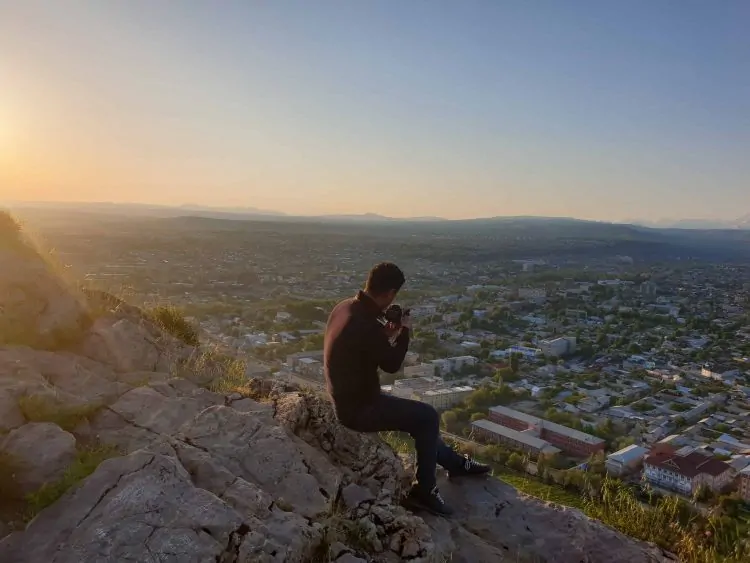
The first thing you will notice while climbing to the top is the astonishing panoramic views of the city and beyond. You will be able to gaze out and see the magnificent Pamir Mountains to the south and the Tien-Shan Mountains to the North that surround the Fergana valley.
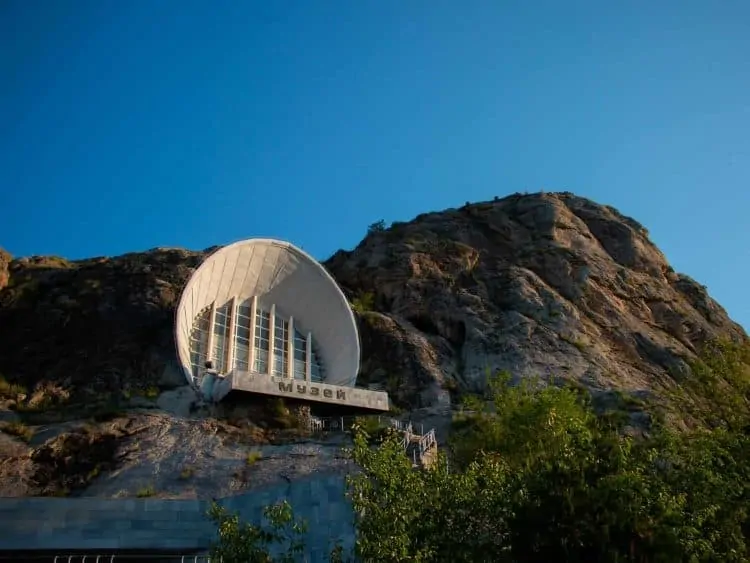
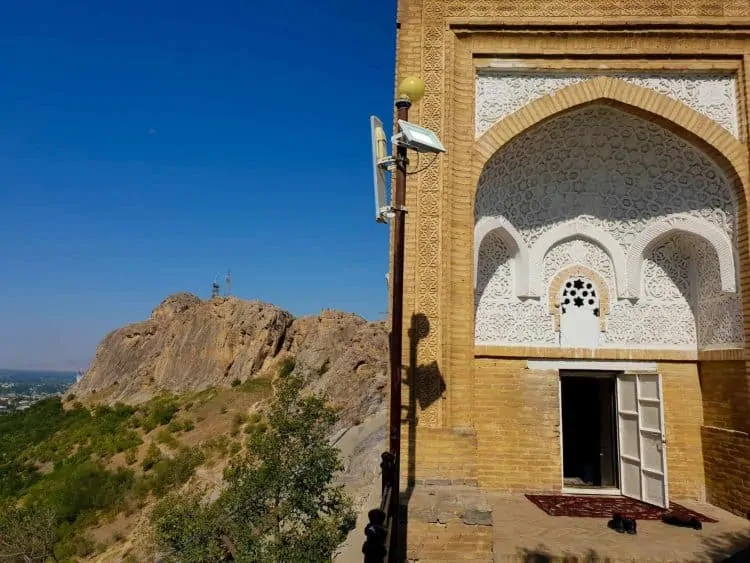
You will encounter several caves along the way. The first and largest among them features a remarkable, intriguing cave museum. This museum showcases the region’s spiritual history, archaeological artefacts, and flora. The other caves are much smaller and will require some extra effort to climb, but they are worth it, as they offer even more astonishing views. The mountain is home to numerous shrines, and locals regularly visit them to perform healing rituals. Travelers are always welcome to join them and take part in these rituals.
The mountain is considered moderately difficult to climb, making it a great workout for your body and soul. On average, exploring Sulaiman-Too takes about 1.5–2 hours.
If you are interested in learning more about this natural and cultural monument, please check out my ‘Sulaiman Too Tour’ and the unconventional ‘Sunset on the Mountain Tour’. These tours guarantee even more interesting facts, entertainment, and cultural experiences.
Jayma Bazaar
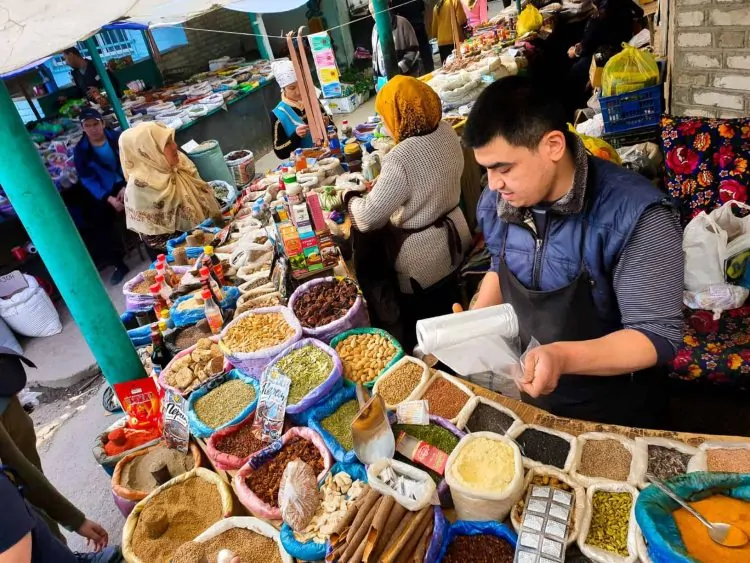
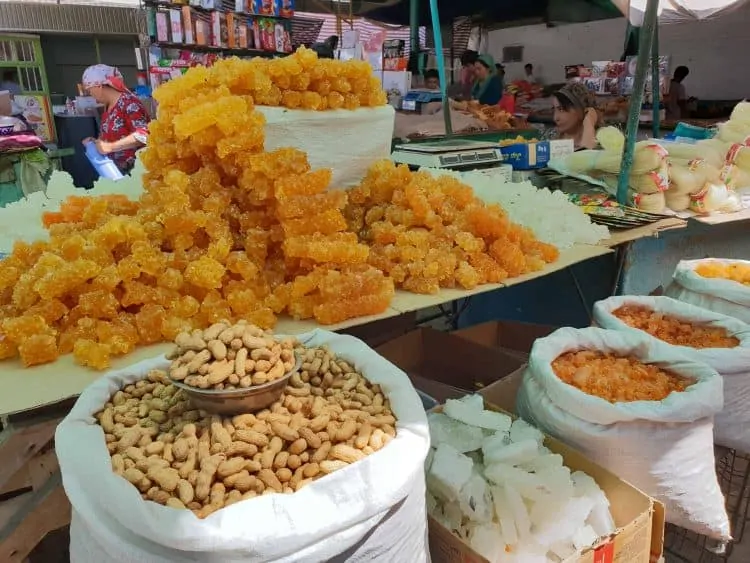
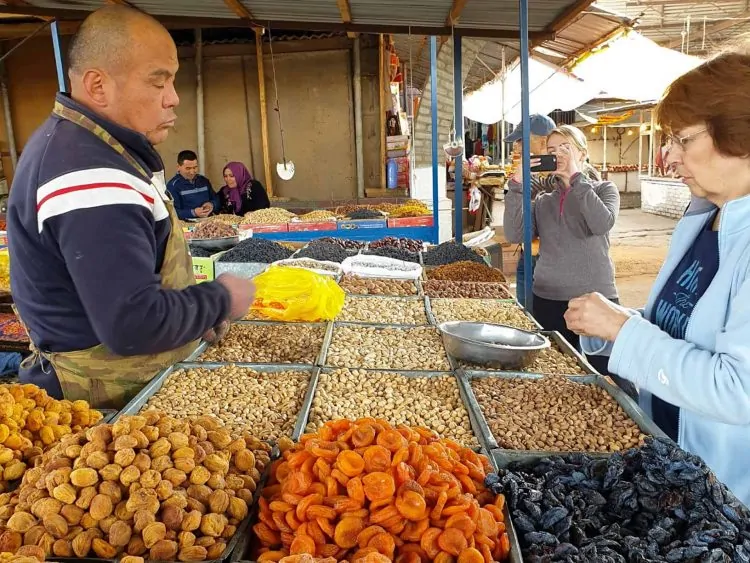
The Jayma Bazaar has existed in Osh for the last 2000 years. Jayma Bazar’s authentic ‘eastern’ cultural attributes are the main reason why tourists desire to visit it. However, long before becoming a major tourist attraction, this bazaar played a crucial role in the region. It served as the primary driver of the city’s political and socio-economic development and continues to do so today.
Today, Jayama bazaar stretches (if you know the length in meters or km, enter it here) from north to south along the banks of the Ak-Buura River. Goods of all kinds, such as souvenirs, clothing (national and imported), dried fruits, nuts, spices, electronics, carpentry and forging products, and many other products are found here. You will notice that the bazaar’s organizational structure is both highly structured and chaotic. Some sections were dedicated to a single product or category, while others included a mix of products. With a wide range of products, Jayma Bazaar is not just a tourist destination but also an excellent spot to buy souvenirs at reasonable prices and fresh food.
Central Square (Where 'Big Brother' is Watching you)
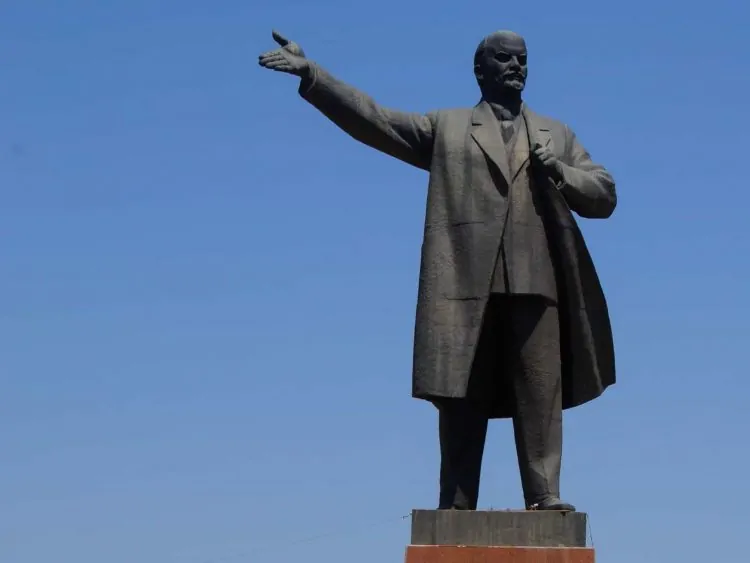
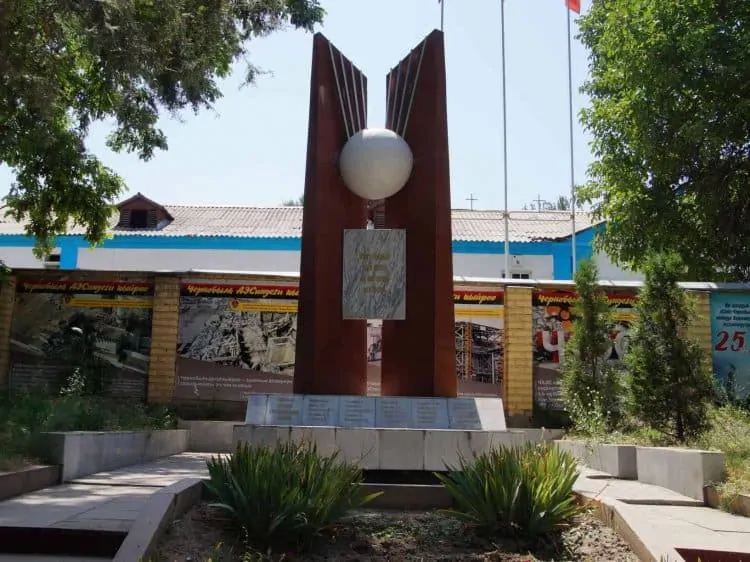
Central Square is an ideal location for comprehensive sightseeing, as it combines several major sights. First, you will notice the tallest remaining statue of Lenin in Central Asia. This giant monument to the leader of the Socialist Revolution stands tall in the middle of the square, pointing north with his iconic palm gesture. However, please don’t follow this direction. At least for now, because you need to explore a small park on the south-western side of Central Square. This cozy, green park is named after Zadneprovskiy and features several memorials and the city’s only Russian Orthodox church. Only after that can you follow Lenin’s suggestion and walk along the avenue named after him.
Soviet Murals
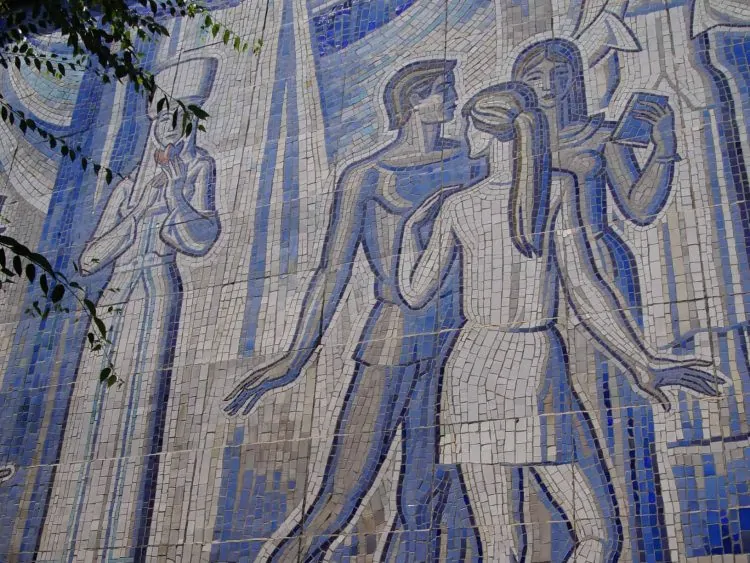
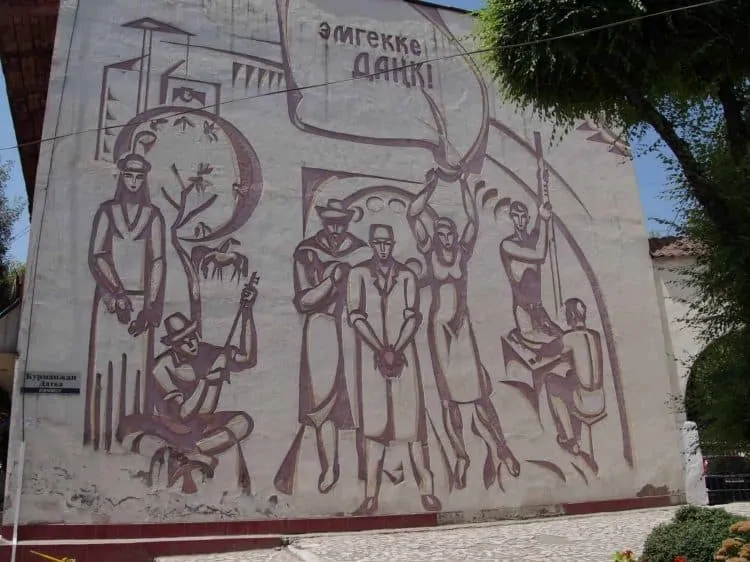
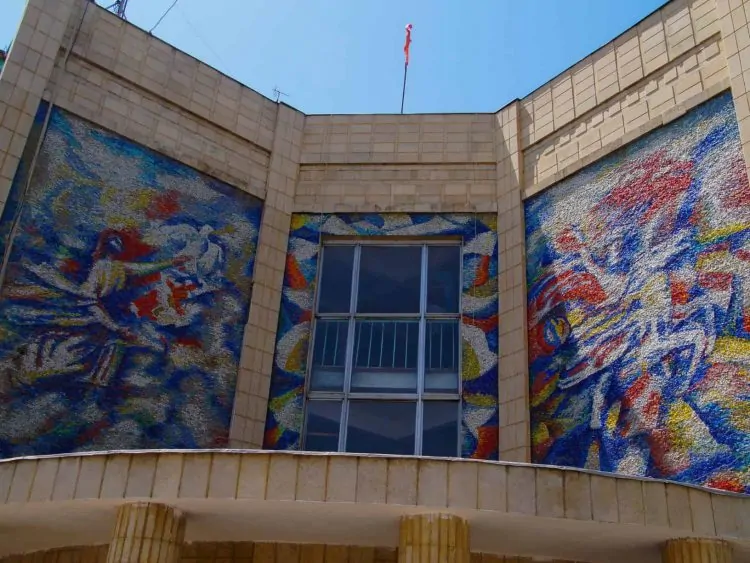
The surviving Soviet architecture is one of the city’s signature elements. Indeed, a 70-year period of communist rule has left a visible footprint. Some of the more interesting aspects of this footprint are the soviet murals found around the city.
These murals are depicted on the sides of buildings. It is believed that local artists, sculptors, and intellectuals initiated these murals. The main goal was to modify the appearance of typical Soviet constructions, which boomed during the 70’s and 80’s. In most cases, these murals depicted Soviet ideology and Kyrgyz cultural symbolism, and sometimes even reflected the building’s purpose. You can easily spot most of the murals in the city center; a few more are outside it. The map of Soviet murals’ locations will be embedded under this post soon. Go ahead and check them out on your own.
Paris
Wait, what?! Paris?!
Osh actually has two places related to Paris! Both places are easy to spot because they have structures resembling the Eiffel Tower. The first Eiffel Tower is located in the Park of Love, just behind Lenin’s statue. And the second tower, the one we recommend visiting most, hardly resembles Eiffel’s masterpiece, but the scenic views it offers do. The tower is located on the hilltop of “On Adyr”, a remote Uzbek neighborhood on the south-eastern side of Osh. This location provides another astonishing panoramic view, second only to the one on Sulaiman-Too. Currently, it is an undiscovered sight for most tourists, yet a very popular place for the locals. There are several small cozy cafes with ice cream and refreshing drinks. A beautiful sunset adds an air of love, infusing the evening with romance. So while it is not the Paris you are most familiar with, it is considered by the locals to be the “Paris of Osh, because itoffersh a beautiful view of the city and a relaxing, romantic evening.
Photos will be uploaded soon . . .
Parks
Navoi Park
Navoi Park is a lush green space named after a prominent Timurid poet. Located in the city center, it is a perfect spot to find shade from the trees on hot summer days. It is full of tall Platanus trees, river breeze, and amusement attractions. In case of walking in the northern direction, you will end up at the famous Jayma Bazaar. But if you decide to walk south along the river, you will reach the central square and the park of Toktogul.
Toktogul Park
The park is named after the Kyrgyz poet-improviser and satirist Toktogul Satylganov. As a park, it offers a shady, cool area where people enjoy quiet time, walking, and jogging. It also hosts several cozy cafes that offer delicious local food and outdoor tables. If you decide to explore further, visit the Zadneprovsky Park, which is right across the street.
Alymbek Datka Park
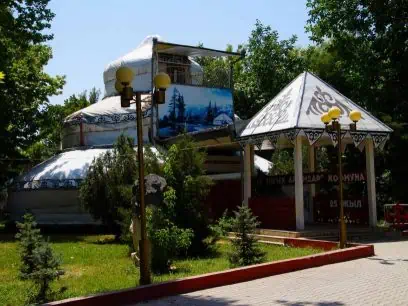
You will often come across the name of Alymbek Datka while traveling in Kyrgyzstan. Alymbek Datka was the ruler of the Alay Kyrgyz tribes in the mid-19th century. He and his wife, Kurmanjan Datka, made a huge contribution to the future of the Kyrgyz nation. In this park, you will find the commemoration of Alymbek’s life in a three-store yurt. In an ethnographic museum, the yurt depicts the life of 19th-century Kyrgyz nomads. The park also hosts several outdoor cafes with yurts and tapchans.